Nyhed
When soft toys and cubes help children with hearing loss
Nyhed
When soft toys and cubes help children with hearing loss
When soft toys and cubes help children with hearing loss
Nyhed
Nyhed
By Nelly Sander, AAU Communication and Public Affairs
Photo and graphics: Francesco Ganis, Department of Architecture and Media Technology, AAU
Children with hearing loss can train their listening skills through play, movement and bodily experiences. This is demonstrated in AAU researcher Francesco Ganis’s PhD thesis, in which he developed and tested a number of interactive prototypes such as soft toys, spinning games and cubes. Common to all of them is that they connect sound with the body, for example through vibrations and physical interaction.
Today, children with hearing loss have far better opportunities than in the past. Early detection and treatment means that many develop spoken language on a par with their peers.
To support children with hearing loss in more complex listening tasks—such as identifying where a sound is coming from, recognising sounds or interpreting emotions in voices, Francesco Ganis has investigated how children with hearing loss can learn this through relevant and contemporary play.
This is the foundation of Francesco Gani's research, in which he brings play and specially developed toys into the child's listening exercises:
“When training takes place through play, it becomes more motivating and, for many children, easier to crack the code of difficult listening tasks.”
In practice, this means that listening exercises are integrated into games the child is already familiar with, rather than standing alone as a separate training activity,” he explains.
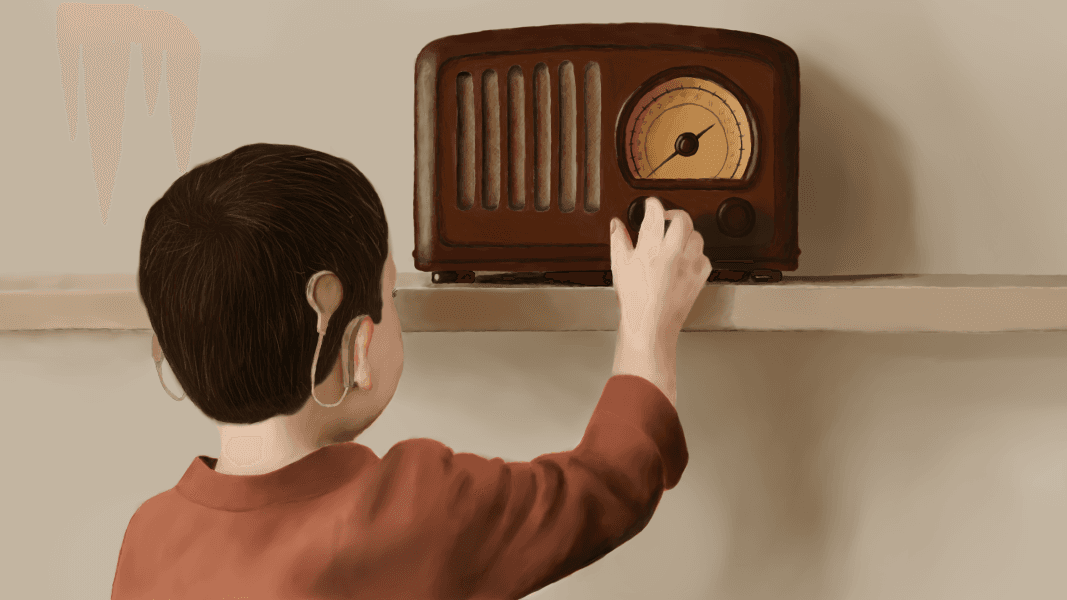
Several of the prototypes use so-called vibrotactile feedback, i.e. sound converted into vibrations that the child can feel. This can be a support for children whose auditory signal is weak or indistinct. The vibrations make the sound more concrete, and give the child more ways to understand it.
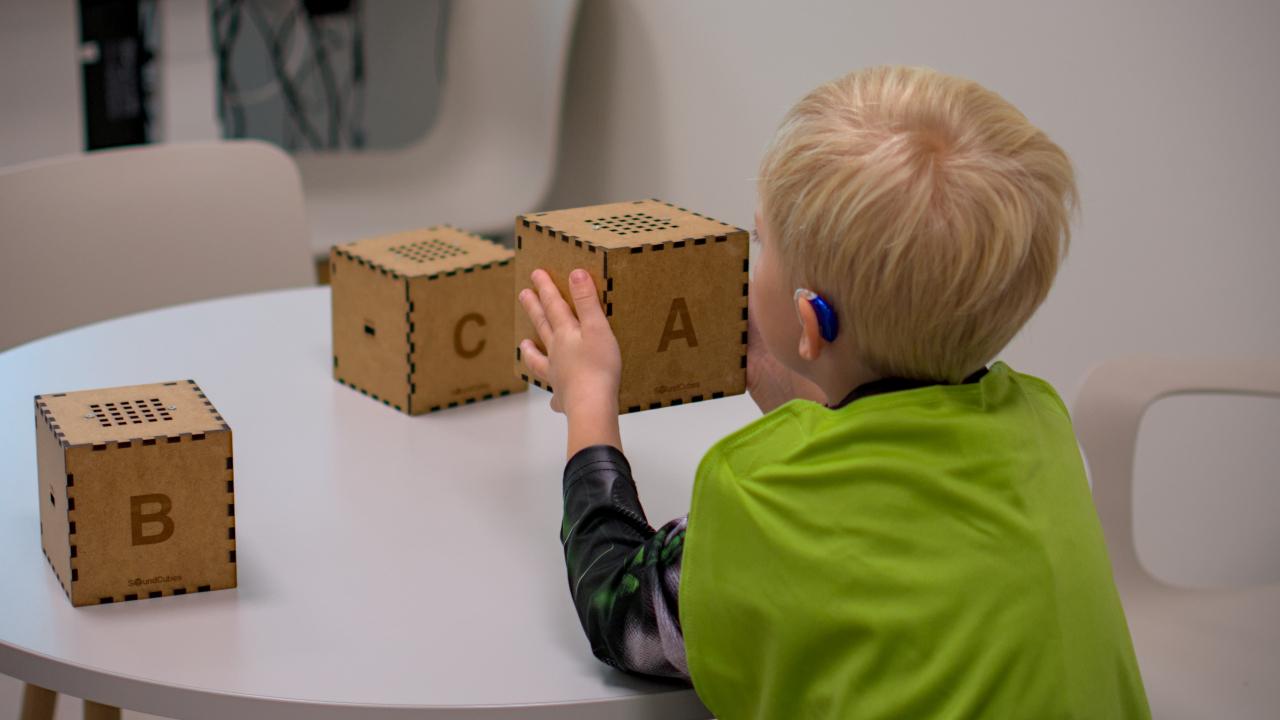
Several of the tested exercises train skills that are central to being able to participate in social communities. Among other things, some of the children worked on identifying the direction of sounds, —locating where in the room a sound originated. Another activity involved recognising emotions in voices, where the child turned a cube to indicate the emotion they perceived.
Vibrotactile support is not relevant for everyone. For some children, it may serve as temporary assistance on the way to more independent listening skills, while others may not need it at all.. According to the researcher, there is no single solution that fits everyone.
"All tests supported that children with hearing loss are, of course, just as different as all other children. Some engage deeply, while others quickly lose interest if they cannot see the point of what they are doing.Toys and exercises must be adaptable to the individual child if they are to work in practice," says Francesco Ganis, who particularly highlights the strong collaboration he has had with the Center for Hearing and Balance at Rigshospitalet.
Integrate listening into play rather than using separate exercises
Use the body actively, e.g. through movement or tactile elements
Start with what motivates the individual child
Keep solutions simple so they work in a busy everyday life
Adapt the activities. There is no single approach that works for everyone