Nyhed
VR training can make everyday life easier for children and young people with challenges
Nyhed
VR training can make everyday life easier for children and young people with challenges
VR training can make everyday life easier for children and young people with challenges
Nyhed
Nyhed
By Nelly Sander, AAU Kommunikation and Public Affairs
Graphics: Søren Emil Søe Degn
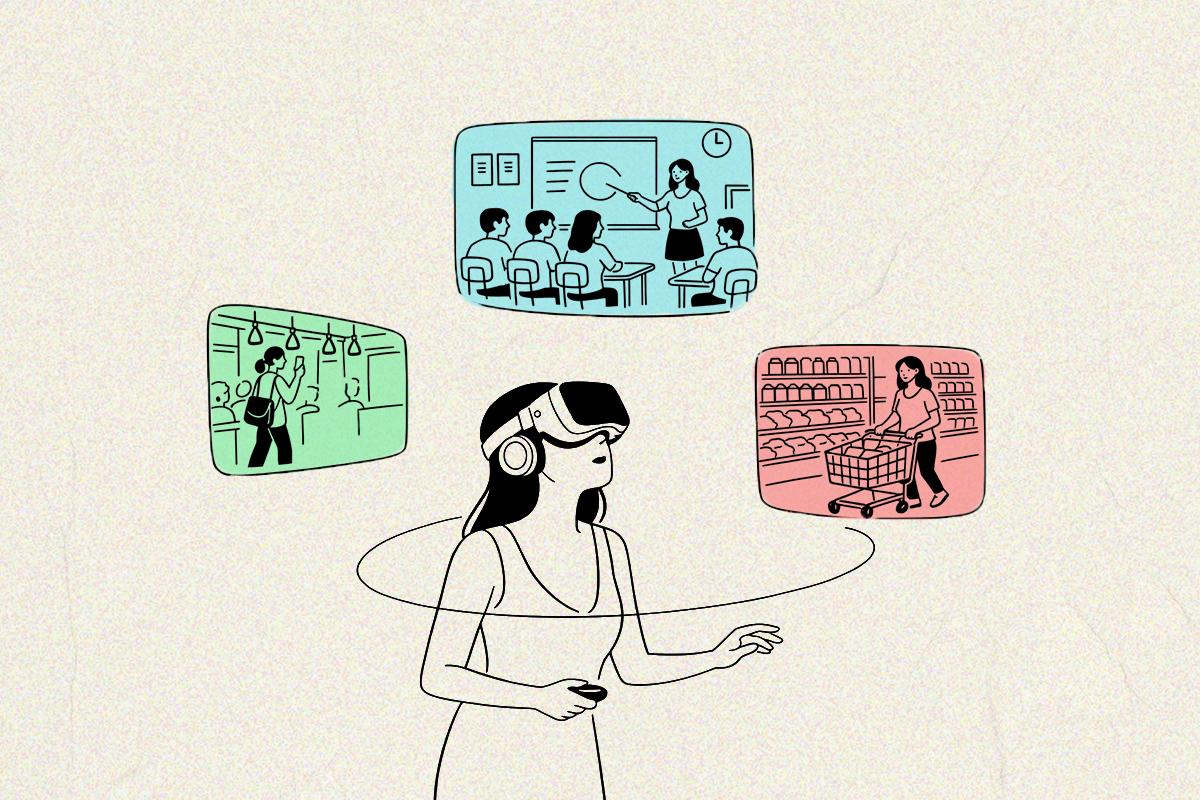
For children and young people with neurodivergence, ordinary everyday situations can feel very overwhelming. This applies to everything from shopping and public transport to showing up and being present in class.
Training with VR can help this group rehearse realistic situations and environments without feeling pressure or fear of failing in front of others. This is explained by AAU Associate Professor Ali Adjorlu, who researches VR training for children and young people with neurodivergence.
Through his research, he has met many young people who struggle to navigate social situations in the real world, yet often feel comfortable behind a computer and are skilled at forming relationships through online games.
"In VR, you can place the user in simulations of real situations. It is situations that are essential for an independent adult life. VR does not feel like a test, but more like a computer game, and for many children and young people, it is a safe place to practice because they can try things out without being judged by others," says Ali Adjorlu.
A concrete example is supermarket training. Here, the researchers have developed a virtual version of Føtex, where young people can practise navigating the store and completing a shopping trip in a controlled setting.
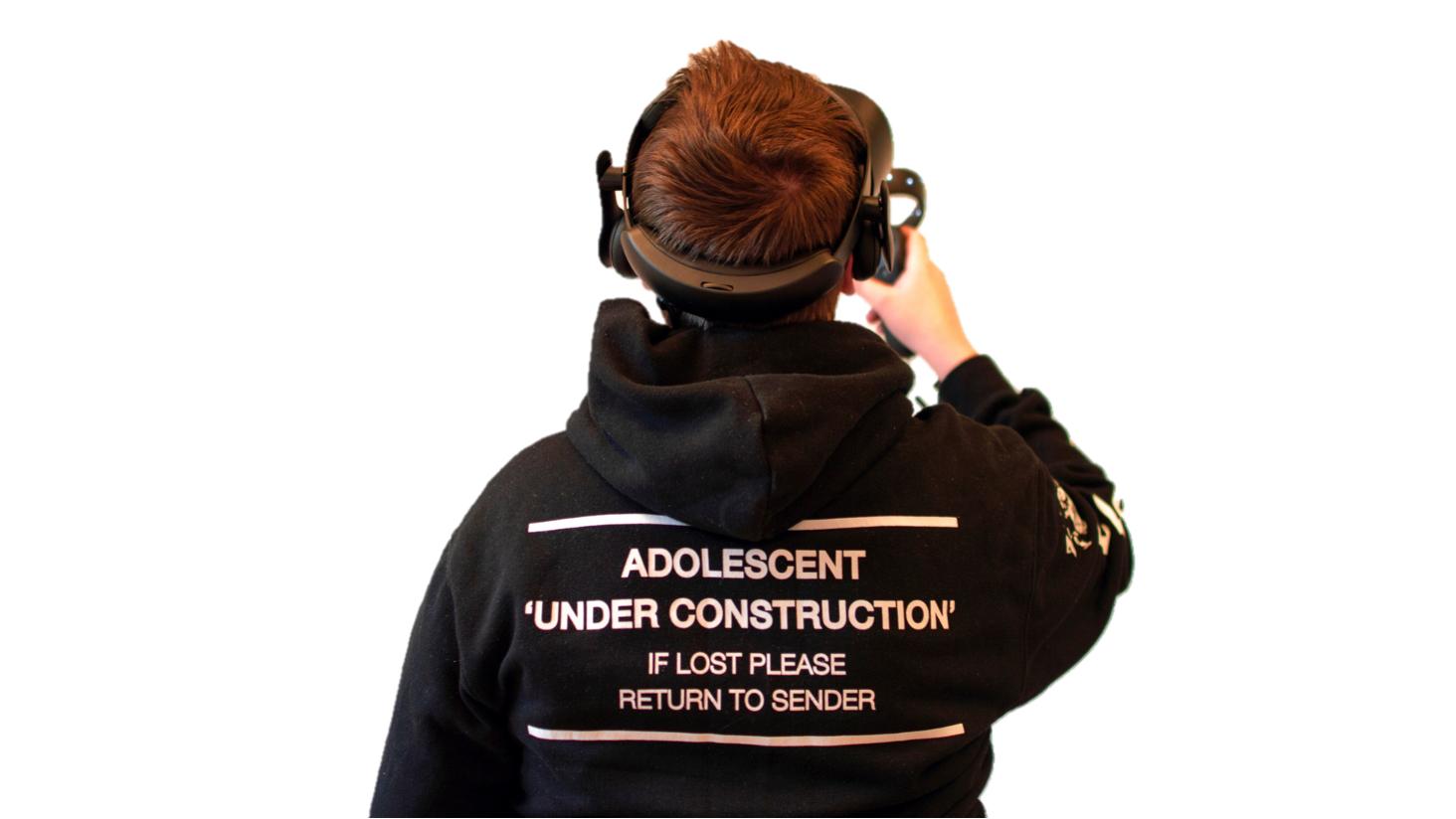
The researchers measured the participants' ability to orient themselves and complete a shopping task in a real supermarket both before and after the VR training.
"Here we saw significant improvements. For example, we experienced a young person who, before the VR training, refused to go into the real supermarket alone. After the VR course, the person in question went in and said out loud: 'This is like the game I've played.' The person then completed the entire shopping trip without assistance, which is a good example of how VR can create recognisability, security, and transferable learning from virtual to real-life situations," says Ali Adjorlu.
VR training can also make a difference in educational settings. In one research project, Ali Adjorlu and his colleagues worked with a young person who often displayed extroverted behaviour in ordinary teaching situations, including hitting teachers and other pupils or throwing objects. This occurred both in classroom teaching and in one-to-one sessions.
In VR, however, a completely different pattern emerged. The young person calmed down and was able to receive teaching in a virtual classroom, where pupil and teacher met in the same digital space.
“Examples like this suggest that VR can create a learning environment with fewer stressors and greater calm than the physical teaching context can. And it provides better conditions for well-being and learning,” says Ali Adjorlu.
Unlike traditional computer games, VR training involves the whole body. The user can move around, look for the bus stop, take items off shelves or practice making eye contact in a conversation.
Another central element of VR training is the ability to adjust the level of difficulty. You can increase or reduce complexity by lowering background noise, removing distracting elements or breaking situations down into smaller steps.
"In VR, the user has the opportunity to practice at their own pace with one thing at a time. This creates an important sense of security for many children and young people with neurodivergence, because they can make mistakes without consequences. In this way, VR acts as a bridge between the familiar and the situations they encounter in real life," says Ali Adjorlu.
According to Ali Adjorlu, the next step is to further develop VR environments so that they more accurately reflect the challenges children and young people face in everyday life, while also identifying how different types of challenges can best be addressed.
“For technologies such as VR to become real solutions in the coming years, a strong interdisciplinary research effort is required in which media technologists work closely with psychologists, learning researchers, special educators and communication researchers,” he says.