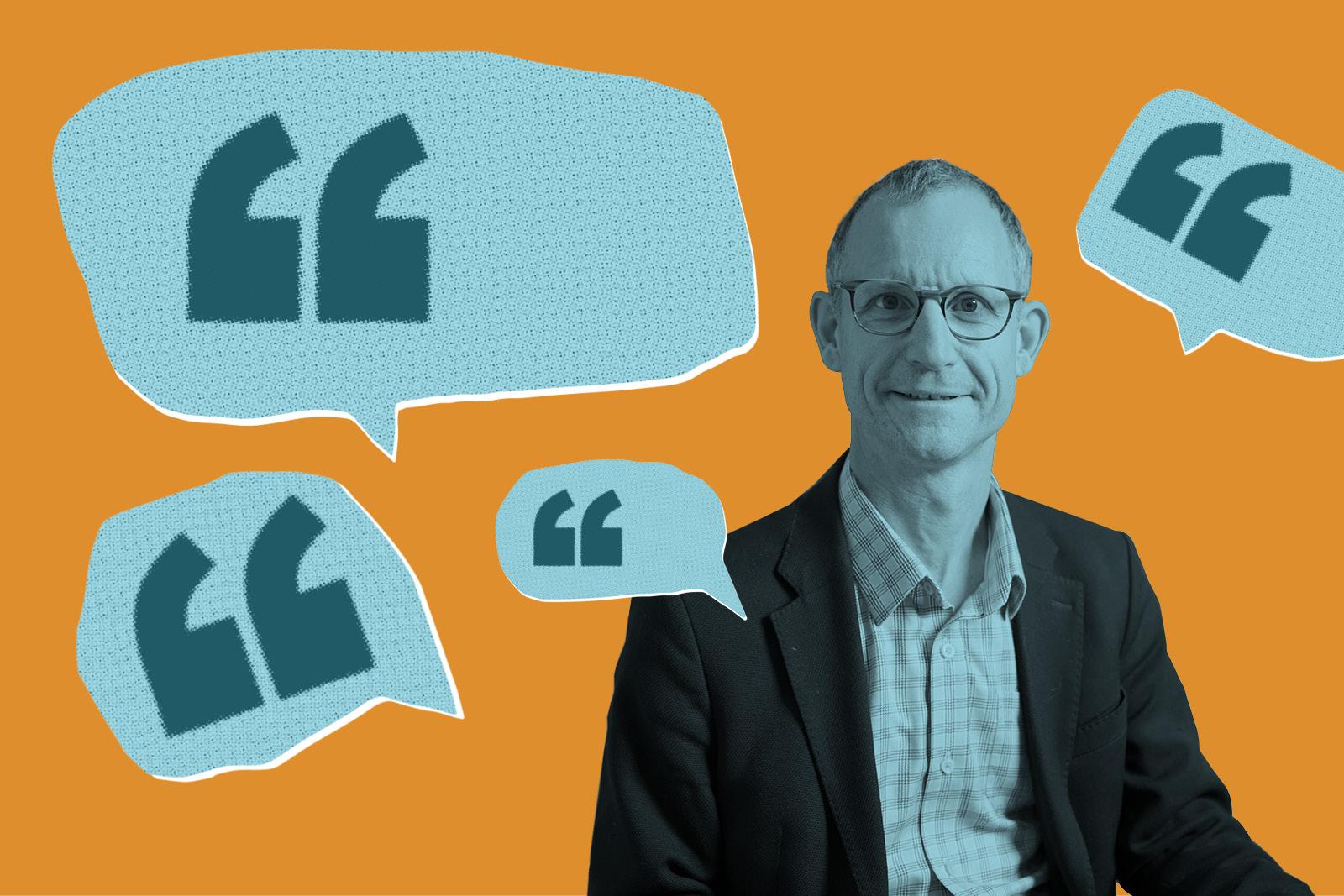
When Sten Bønsing was hired at AAU, there was a strong tradition among his experienced colleagues of participating in the public debate. So, it was natural for him to follow in their footsteps by picking up the phone when the media called for an expert opinion.
Today, Sten Bønsing is a professor and vice head at the Department of Law and among the most quoted experts in the Danish media. Here, he talks about his experiences in the media, and about the conditions that come with the role of expert.
Professional challenge and responsibility
Sten Bønsing typically spends three to four hours a week talking to journalists. For him, the motivation for putting himself out there is first and foremost professional.
"Because my work involves research and teaching on a daily basis, I like the academic challenge of having to take a position on specific legal issues," says Sten Bønsing.
He also sees it as important to society that researchers contribute knowledge and perspectives that can help qualify the public debate:
"If you can contribute with legal answers to legal problems in society, then we all benefit," he says.
Obligations of the expert role
Although Sten Bønsing generally finds the work with the media meaningful, he is very aware of the professional risks that come with the role of expert. The pace of media work and the need for quick answers demand precision and judgement, and for him it is crucial to take responsibility for what he says, even when the framework is high-pressure.
"I haven't had many bad experiences, and I think I learned from the start to live with the fact that the media can be harsh or misunderstand something you've said. I find it much more difficult to face having made mistakes myself in my assessments," says the professor.
He also points out that one of the most pervasive pitfalls in the media role is when the boundary between professional knowledge and personal attitudes becomes blurred. According to Sten Bønsing, the academic title can give comments a weight that entails obligations, including to be clear about what you are not commenting on.
"I really think that we experts should stick to our field of expertise. The fact that you are an expert or have a PhD does not mean that you are a better person or have better moral perceptions," he says.
He sees this awareness of role and responsibility as a prerequisite for maintaining both professional credibility and public trust.
Inspiration for teaching and research
Sten Bønsing emphasizes that media work is not only about responsibility and risks. Experiences in the media also provide new inspiration that he uses in his work at the Department of Law.
For example, he has written research articles on the rules for gifts and bribes of public employees, inspired by numerous media stories he has commented on as a professor of administrative law.
He has also used the many legal issues and cases he has been presented with over the years as examples in teaching AAU's law students.
"I can spice up the teaching with a practical example, for example if there is a local case about impartiality or the like. It can make the theoretical a little more concrete for those I teach," says the professor.
Although media work does not necessarily count towards formal qualifications, Sten Bønsing believes that it can have value in the long term. Visibility and networks can open doors – including in research circles – and he thus sees participation in the media as an active choice that the individual researcher must make.