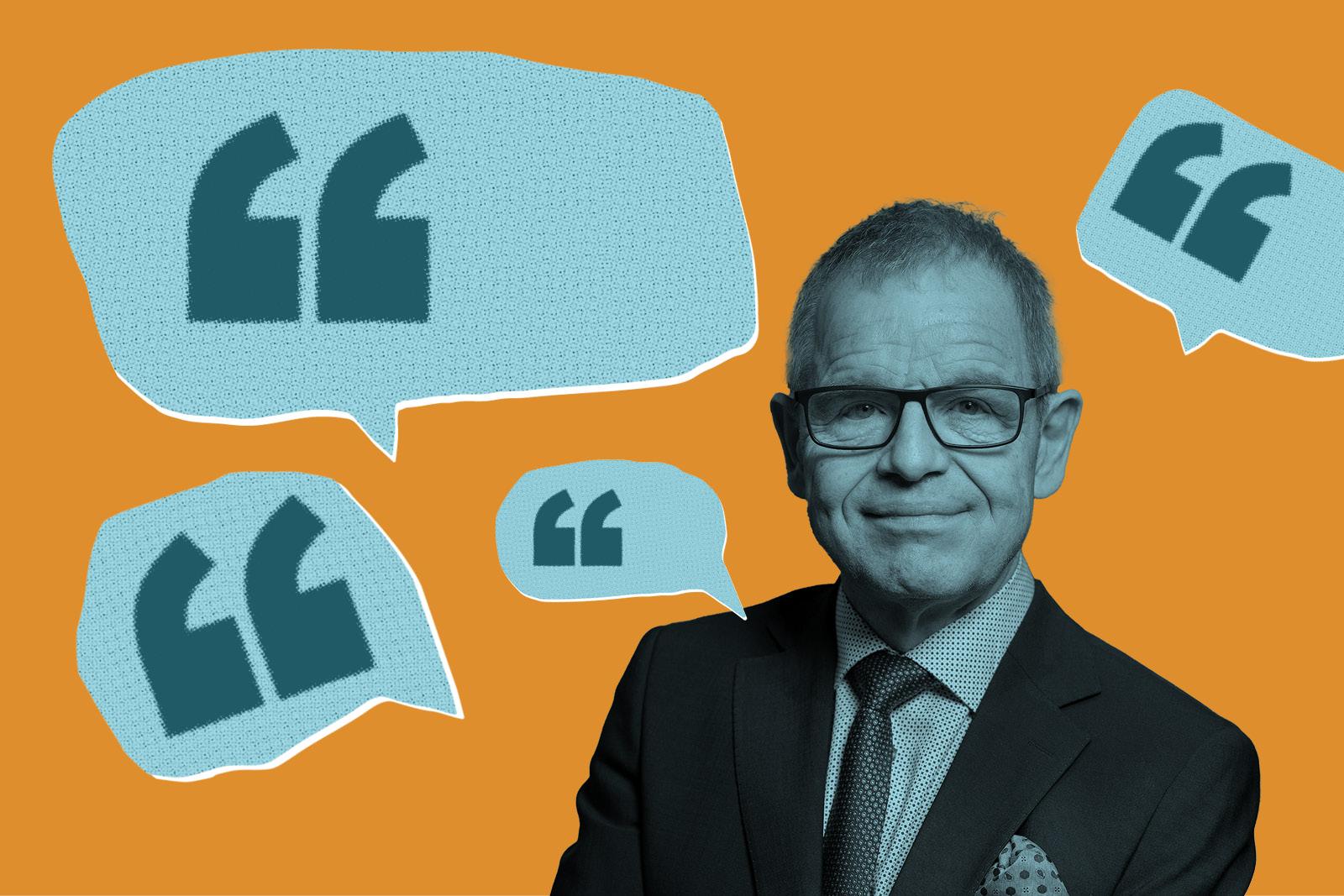
For Lars Krull, research communication is not something that is simply an add-on to his work. It is an integral part of his professional identity. With more than 16,000 media mentions throughout his career, daily contact with journalists, and an extensive network in both the financial sector and political circles, he has accumulated experience that goes far beyond the headlines.
Influence through communication
In Lars Krull's eyes, research articles often have a narrow audience, while the media provide an opportunity to disseminate knowledge more broadly in society. In the media, complex relationships can be explained, and academic perspectives can contribute to a more nuanced public debate.
"I am motivated by the fact that there is someone who wants to hear about what I know something about, and by what the communication can do, like influence new regulations and laws. It is motivating to help push processes in the right directions," says Lars Krull and adds:
"As a university, our greatest impact on society is rarely through research alone, but in the interaction between being the ones that people look to for answers and the knowledge we make available."
One example is still clear to him. In 2018, he was asked to interpret the text on money laundering in a hearing in the Danish Parliament. The hearing attracted a great deal of attention, was transmitted to the European Parliament and simultaneously interpreted into all EU languages. This led to coverage in The Wall Street Journal and inquiries from the French news agency AFP.
Ready when the phone rings
While some researchers see media work as time-consuming, for Lars Krull it is a regular part of day-to-day life. His day begins with financial news, and he continuously follows both market and legislative developments. Access to extensive databases and dialogue with actors in the field are part of the routine.
"It's about having familiarized myself with what's going on, so I'm ready when the phone rings," he says.
Trust as a basic premise
According to Lars Krull, trust is a prerequisite for well-functioning collaboration with the media. He has never felt burned by a journalist nor does he ask to review quotes.
"I treat all journalists the same, regardless of experience," he says.
This approach means that students, interns and younger journalists are given the same time and treated with the same seriousness as the most experienced. For Lars Krull, it is about both good ethics and about building relationships that carry on into the future.
Professional benefit
Media work not only provides societal impact, it also gives something back professionally. The ongoing dialogue with journalists, authorities and market players sharpens his overview and keeps him up to date in his field.
At the same time, he feels that the communication strengthens his relevance in teaching and opens doors to new collaborations, invitations and professional contexts that he would not otherwise have access to.
Advice for younger researchers
Many years of experience have given Lars Krull a clear view of what works when dealing with the media, and what you should be aware of. He has some advice for younger colleagues who are considering getting more involved in the public debate: