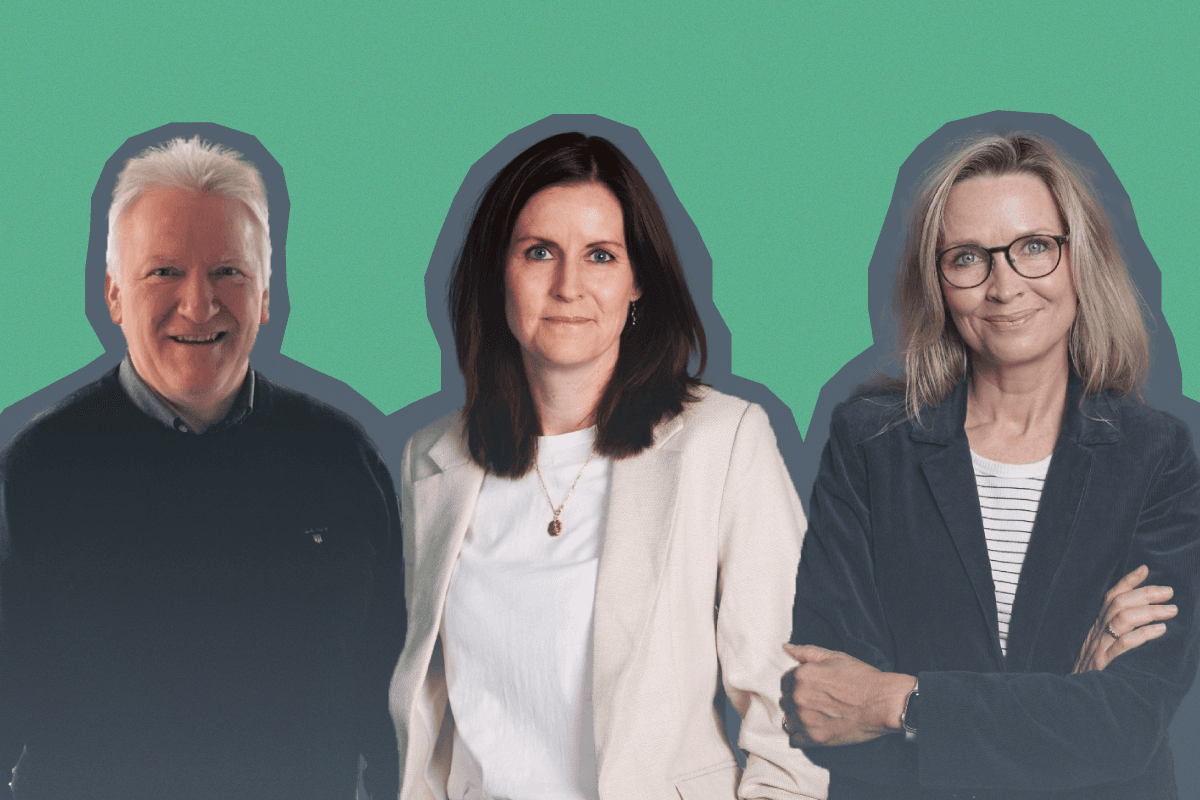
Trine Schultz, National Council for Children
"We must ensure that children are not forgotten in the legislation."
Trine Schultz, Professor of Social Law and Head of Department at the Department of Law was appointed to the National Council for Children based on a recommendation from Aalborg University. The council advises on children's rights, well-being and conditions in Denmark in light of the UN Convention on the Rights of the Child. In addition, the council works broadly and in an interdisciplinary way to ensure that children's perspectives are incorporated into political decisions, legislation and social development.
"For me, the work of the council is a way of building bridges between research and practice. I think everyone who deals with research and education at the university knows how important it is for our work to have a real impact in society. It's a huge motivation to be able to see that what we do actually makes a difference in practice," she says.
And it is precisely this link between research and societal needs that is the focal point of her work on the council.
"I was appointed because I can contribute particular knowledge. The idea is that our different disciplines combine to contribute to a well-informed basis for advising and elucidating the many conditions that affect children in Danish society," she says.
She emphasizes that the council's work is mainly about translating this professional breadth into concrete advice.
"There is an incredible amount of new legislation in Denmark all the time, and a large part of the council's work is thus to formulate responses for the comment periods. Sometimes the legislation is directly about children, but other times it isn’t, and then our job is to draw attention to the fact that the children’s perspective has been completely forgotten," she explains.
It can be anything from rules on the use of force in public school to young people's working conditions or criminal law matters where children's special needs and rights must be taken into account.
Although she was appointed for her legal expertise, she is aware that the work of the council requires more than disciplinary knowledge.
"What I know most about may not always be what the council is working on. So, my role is also about asking the right questions and contributing in a way that includes our different disciplines. Sometimes I can spot something that the others don't see, and then it's important to elucidate the new perspectives," she explains, emphasizing future hopes for the field.
"My hope is that National Council for Children will make children's voices much clearer in the decision-making processes. That children are included in all the places where it is relevant to do so, and that we focus on what is important for their well-being in society."