Nyhed
How an AAU alumnus helped to found Denmark’s first space-shipping company
Lagt online: 06.03.2026
Nyhed
How an AAU alumnus helped to found Denmark’s first space-shipping company
Lagt online: 06.03.2026
How an AAU alumnus helped to found Denmark’s first space-shipping company
Nyhed
Lagt online: 06.03.2026
Nyhed
Lagt online: 06.03.2026
Text and photo: Nelly Sander, AAU Communication and Public Affairs
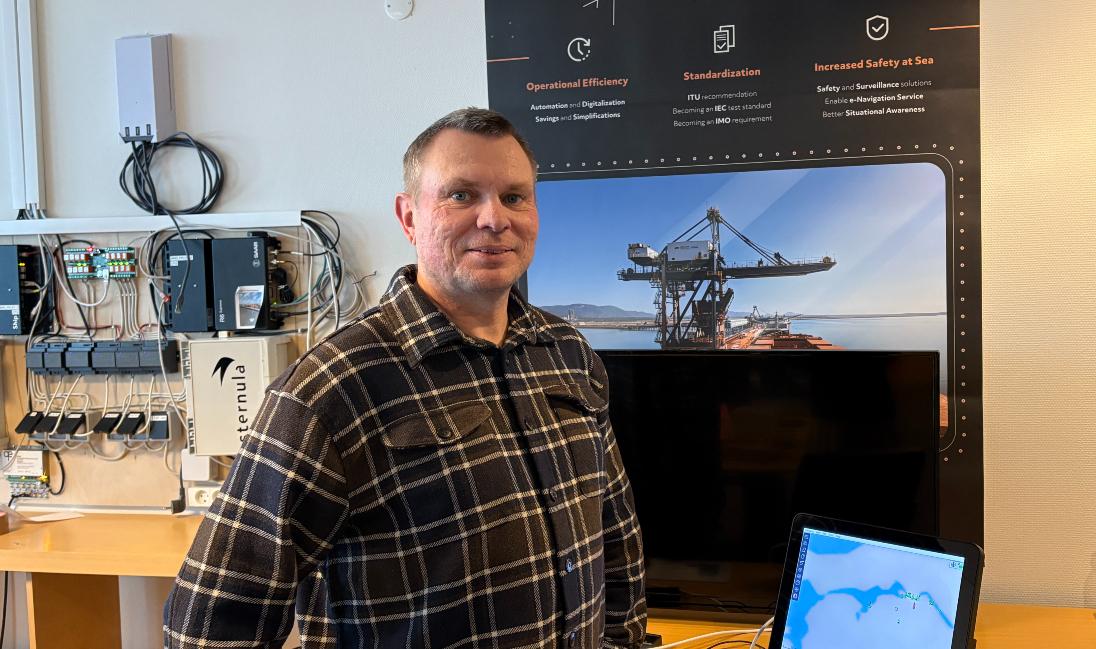
When Stefan Pielmeier knocked on the door of his former colleague, AAU alumnus Lars Moltsen, in 2018, it was far from obvious that the two would soon establish a company which today serves customers worldwide and harbours ambitions to launch a fleet of 60 satellites into orbit within the next six years. The company is Sternula – a space‑shipping company, as CEO Lars Moltsen himself describes it.
Stefan Pielmeier originally approached Lars Moltsen in search of entrepreneurial advice, as he was planning to set up a consultancy. The topic was an emerging maritime communications standard: VDES, which uses small satellites to enhance safety at sea by delivering real‑time information such as warnings about icebergs, whales or sudden storms.
With more than 20 years of entrepreneurial experience behind him, Lars Moltsen was quick to see the potential.
“If there’s a satellite component to this technology anyway, why not establish Denmark’s first satellite operator?” I asked Stefan. “We already have two satellite factories here in the city. Shouldn’t we go and visit them?” recalls Lars Moltsen, now CEO of Sternula.
Stefan Pielmeier and Lars Moltsen quite literally got on their bikes and rode out to the satellite companies GomSpace and Space Inventor – both of which have strong roots in AAU, not least through the university’s long‑standing work with student satellites. Following productive discussions, the two entrepreneurs cycled home and began putting together an application to Innovation Fund Denmark, in collaboration with the university, DMI and a number of local companies.
Innovation Fund Denmark recognised the potential and awarded DKK 20 million to develop the software, build the first satellite and launch it into orbit.
In 2023, it happened. Sternula’s first satellite was launched into space aboard a space bus operated by SpaceX. According to Lars Moltsen, the headline of the contract with SpaceX was simply Ticket to Space.
This early foresight has given Sternula a significant technological edge in relation to the VDES system, which from 2028 will become the global standard for the safety‑critical and navigational information that all large vessels must be able to exchange.
“The grant from Innovation Fund Denmark has been a tremendous help in getting our first satellite up and running, and in securing the competitive advantage that comes from understanding the entire value chain – from digital services at DMI or the Danish Maritime Authority right through to what happens on board the ships,” says Lars Moltsen.
The connection to AAU has always been there. Lars Moltsen holds an MSc in mathematics and computer science from the university and, 30 years on, still regards AAU as an important partner. A significant proportion of Sternula’s employees – including the company’s three student assistants – are AAU graduates. In addition, Sternula currently has a project proposal in progress with the European Space Agency (ESA), to which the university has also been invited.
“There’s always a bit of that connection,” he says. “We may not be a direct spin‑off from Aalborg University, but you could say we are a grandchild. Without the satellite ecosystem in Aalborg, we would never have started.”
More about Sternula