Spring til indhold.

Nyhed

When darkness research becomes timely

Lagt online: 17.03.2026

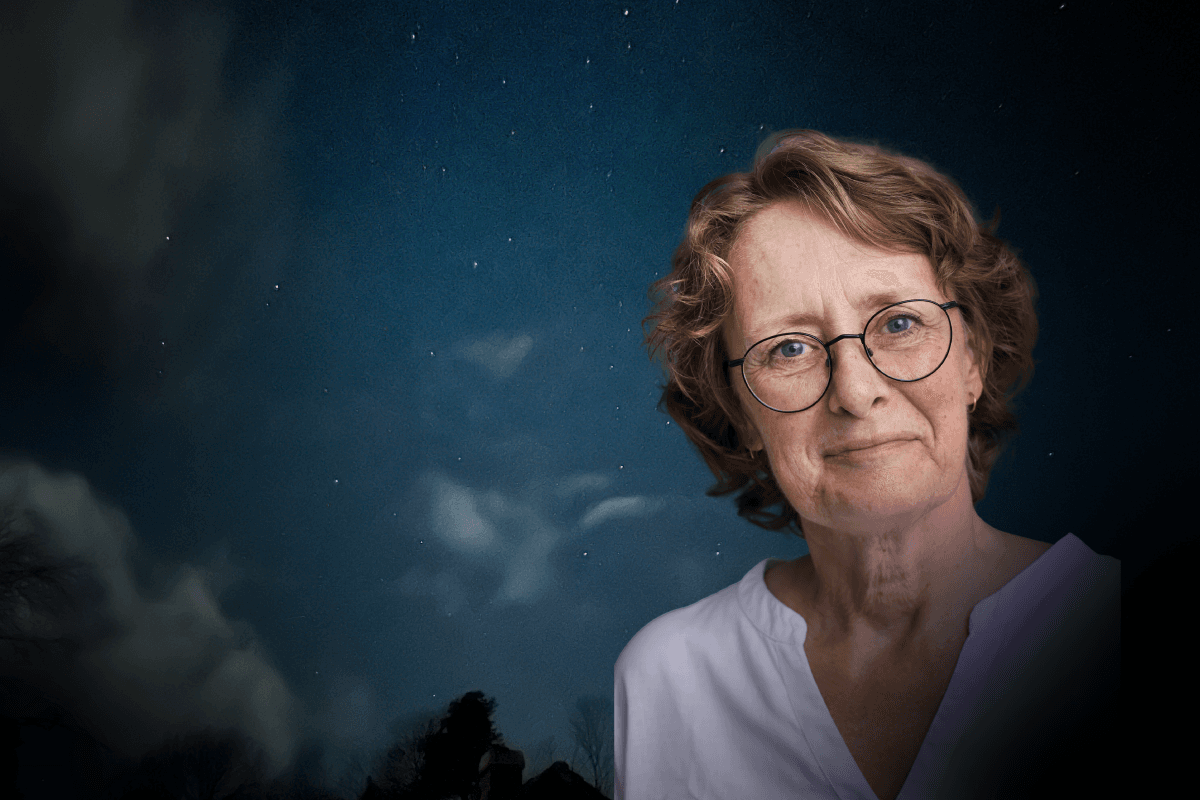
An essay on darkness brought lighting researcher Mette Hvass unexpected and positive media attention in a time when autumn darkness had settled over Denmark. Today, she looks back on the experience as an abrupt but instructive introduction to the media’s logic and its view on news value.

By Lea Laursen Pasgaard, AAU Communication and Public Affairs
Photos: Mette Hvass og Karen Christensen. Illustration: Alberte Spork, AAU 

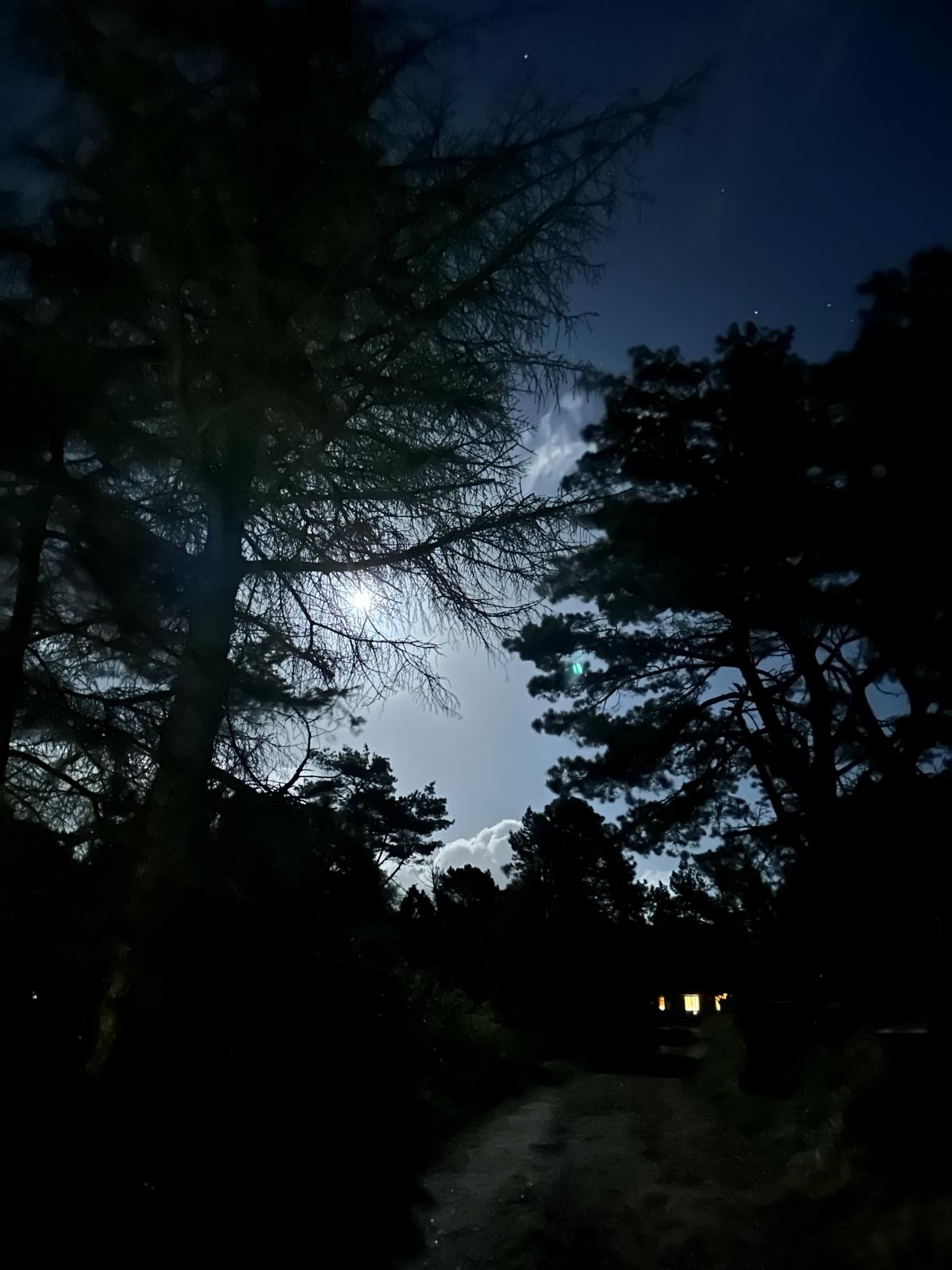
It is November. The days are short, the light is sparse, and many of us are already longing for spring. At this very time, an essay on darkness was published on Videnskab.dk. Here, the message was not to see darkness as something to be fought, but as something we should perhaps embrace. The essay was based on Mette Hvass’ research on darkness and lighting environments, and pointed out that we do not always need more light, but rather better light and a more conscious use of it. It struck a chord.

The essay was published on Videnskab.dk and was quickly picked up by a large number of other media outlets. In just a few days, Mette Hvass went from immersion in research, to radio interviews, news articles and TV appearances, in the middle of the darkest time of the year.

Untested in the pace of the media

The essay format gave room for reflection and sensory appreciation but once the story was out, the pace changed significantly. The media reaction was swift and inquiries came in quick succession, and Mette Hvass experienced first-hand how demanding it can be to communicate research in short, news-oriented formats.

"As a researcher, research is close to my heart. When something means so much, it can be difficult to explain it in a few minutes, and you can easily end up in dead ends," she says.

Through ongoing interviews, Mette Hvass has gained insight into what motivates people to experience nature in the dark, and the source of this motivation.

In the days of what she calls the "media storm", Mette Hvass began to see a pattern in the way the media works and how she gradually learned what it took to get her message across.

"When I came to interview number I-don't-know-what, I could see the kind of system the media works by. You need to be ready with simple points that the general population can understand and use," she says.

When format and timing go awry

Not all media formats were equally good experiences. She found the quick, very short interviews difficult to navigate, while the longer formats allowed for dialogue and nuance.

"I discovered that I couldn't handle those very quick encounters. But in the formats where the journalist was prepared and there was time for conversation, the result was a really good dialogue," she says, referring to her visit to Go'morgen Danmark on TV2 and Louisiana Science Talk.
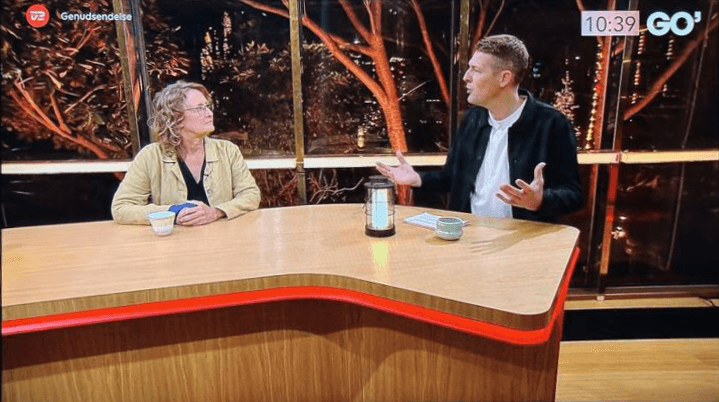
Mette Hvass on Go' Morgen Danmark in November 2025 encourages Danes to make friends with the darkness. Photo: Personal

A new understanding of news value

In retrospect, Mette Hvass sees the process as both overwhelming and educational. She was not trained to handle massive media attention, but the experience has given her a new understanding of how timing and news value interact with research.

"I would have liked to have had some media training. The attention surprised me, and today I see that you can actually think more strategically and plan when and how you present your research to the various media outlets," she says.

For her, however, one thing is clear: When research taps into something that many people can feel in their own everyday lives – like the November darkness – it can suddenly have a much larger audience than you had imagined.

Support for researchers communicating their research in the media

Researchers are always welcome to contact the press team in AAU Communication and Public Affairs (KOMPA) at presse@adm.aau.dk. The mailbox is staffed daily from 9:00 a.m. to 3:00 p.m., where researchers can receive concrete advice ahead of an upcoming media appearance and assistance in prioritizing and responding to other media enquiries.

Researchers who wish to take part in a media training programme are also welcome to contact the press team. Each year, KOMPA assembles a group of researchers for media training based on an assessment of their potential to contribute to and strengthen democratic debate through the media.

See also