Nyhed
The King came by and named bacteria
Lagt online: 08.05.2026
On Friday, 8 May, His Majesty King Frederik visited Aalborg University to name bacteria in the project Microflora Danica.
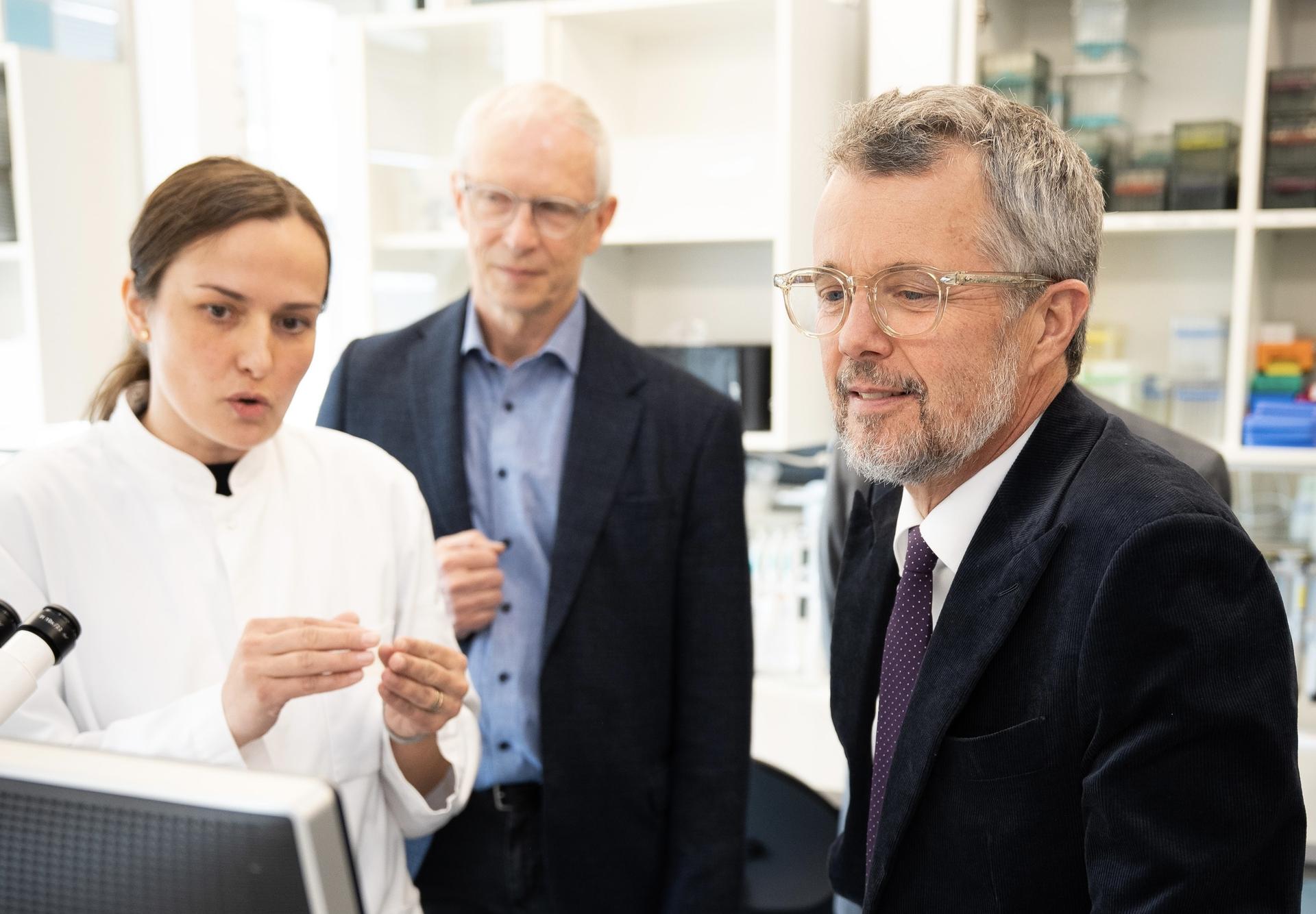
The King came by and named bacteria
Nyhed
Lagt online: 08.05.2026
On Friday, 8 May, His Majesty King Frederik visited Aalborg University to name bacteria in the project Microflora Danica.
By Dorte Larsen, AAU Communication and Public Affairs
Translated by LeeAnn Iovanni, AAU Communication and Public Affairs
Photo: The Royal House of Denmark
In 1761, King Frederik V initiated an unprecedented mapping of Danish flora from fungi to weeds and flowers. A mapping known as Flora Danica.
Now 265 years later, His Majesty the King marks the completion of a new mapping of unprecedented scope: the mapping of Denmark's microbiology in the project Microflora Danica based on more than 10,000 samples collected from fields, forests, lakes, coastal areas, and urban environments across the country.
“It is an honour that H.M. the King is contributing in this way to this landmark research project by naming three newly discovered bacteria identified by the research team. I would also like to thank him for a constructive dialogue about the role of the university,” says Rector Per Michael Johansen.
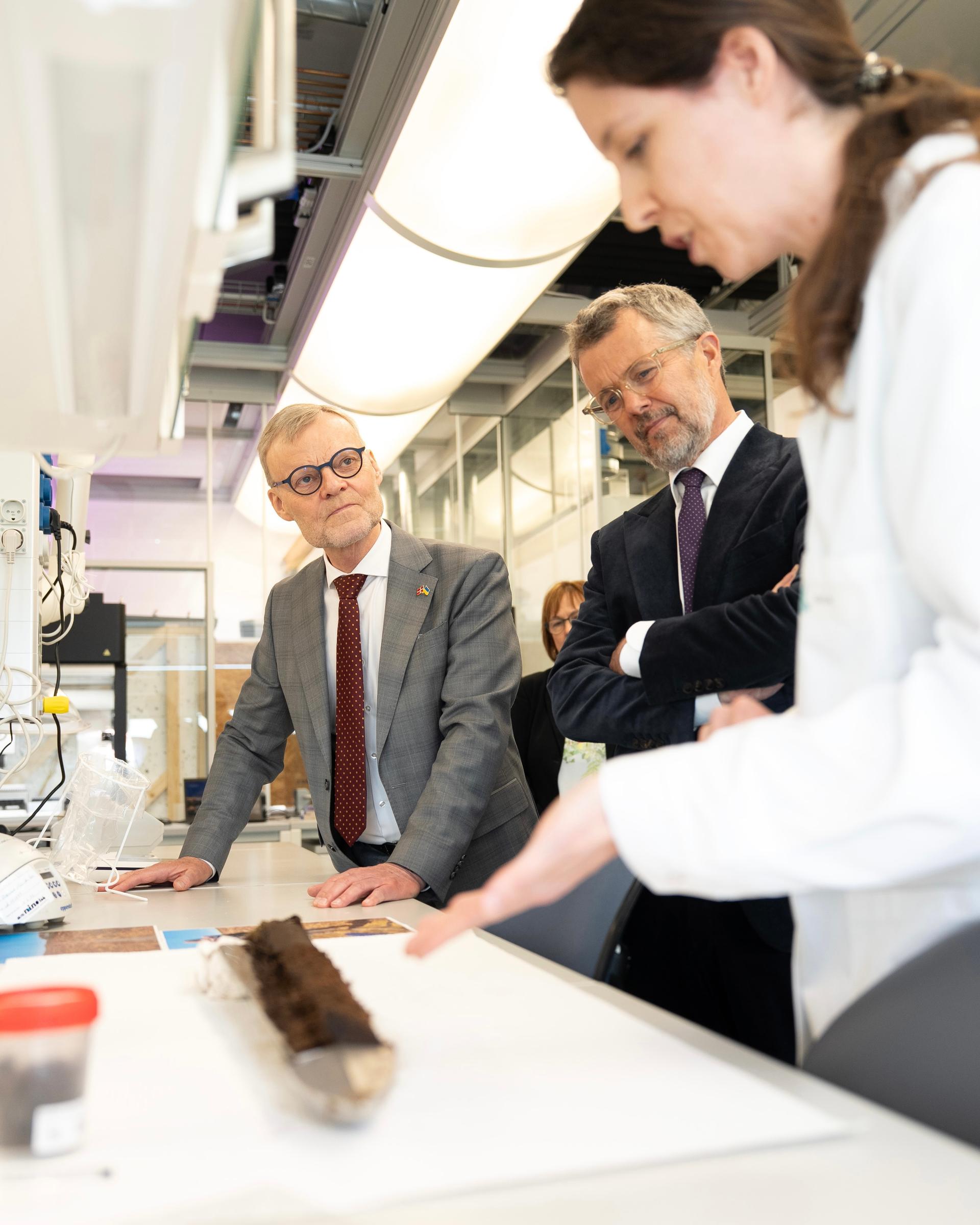
The King’s visit to Aalborg University on Friday, 8 May to name four new bacterial species marks the completion of the project.
"It is a great honour for us that H.M. King Frederik wanted to be involved in the naming. For us, it is a beautiful, symbolic connection from king to king between Flora Danica and Microflora Danica," says Mads Albertsen, Professor in the Department of Chemistry and Bioscience at Aalborg University and one of the project's leaders.
He emphasizes that the bacteria, which have now been named Graastenia ingridihorti, Gribskovia venatica og Querciregia multidomus by the King, were not chosen at random:
"We first identified these three bacteria in areas close to the residences of the royal family, namely in the palace garden at Gråsten Palace, in Gribskov and at the King Oak at Jægerspris Nordskov," he elaborates.
The King's visit also leaves a royal imprint on the extensive atlas with the naming of a fourth bacterium: the bacterium Margrethea Danica which is named after the King's mother, H.M. Dronning Margrethe.

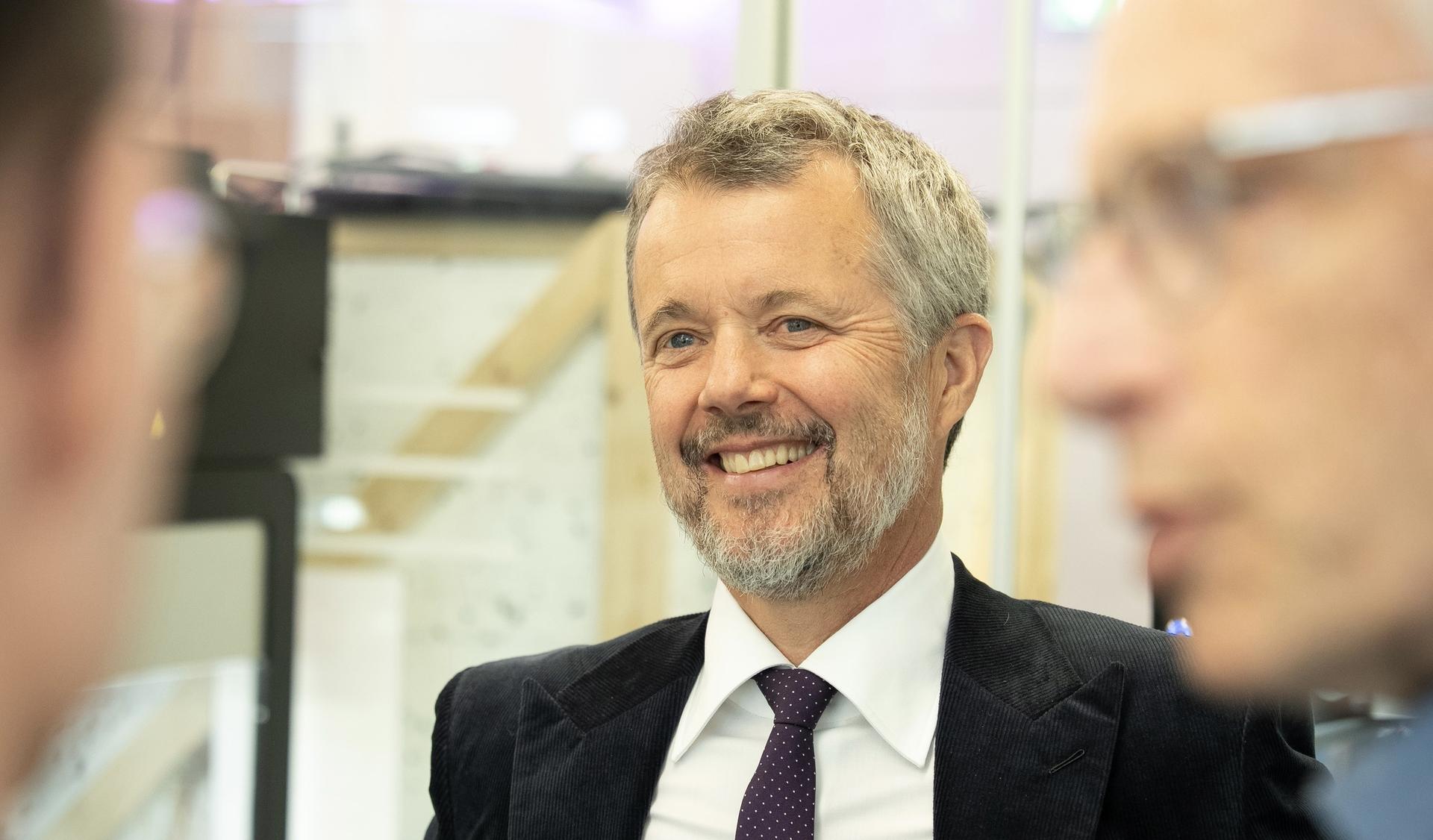
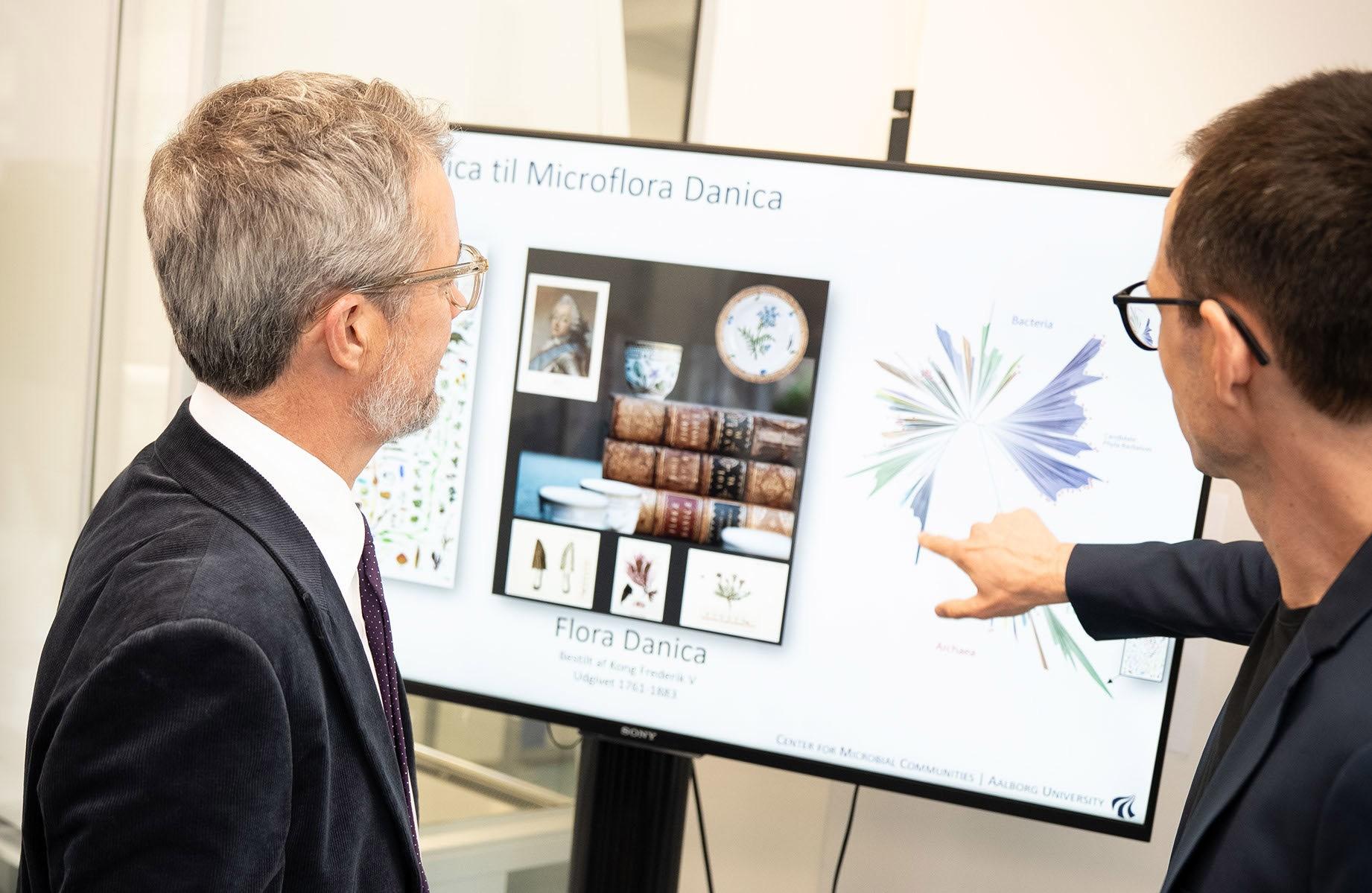
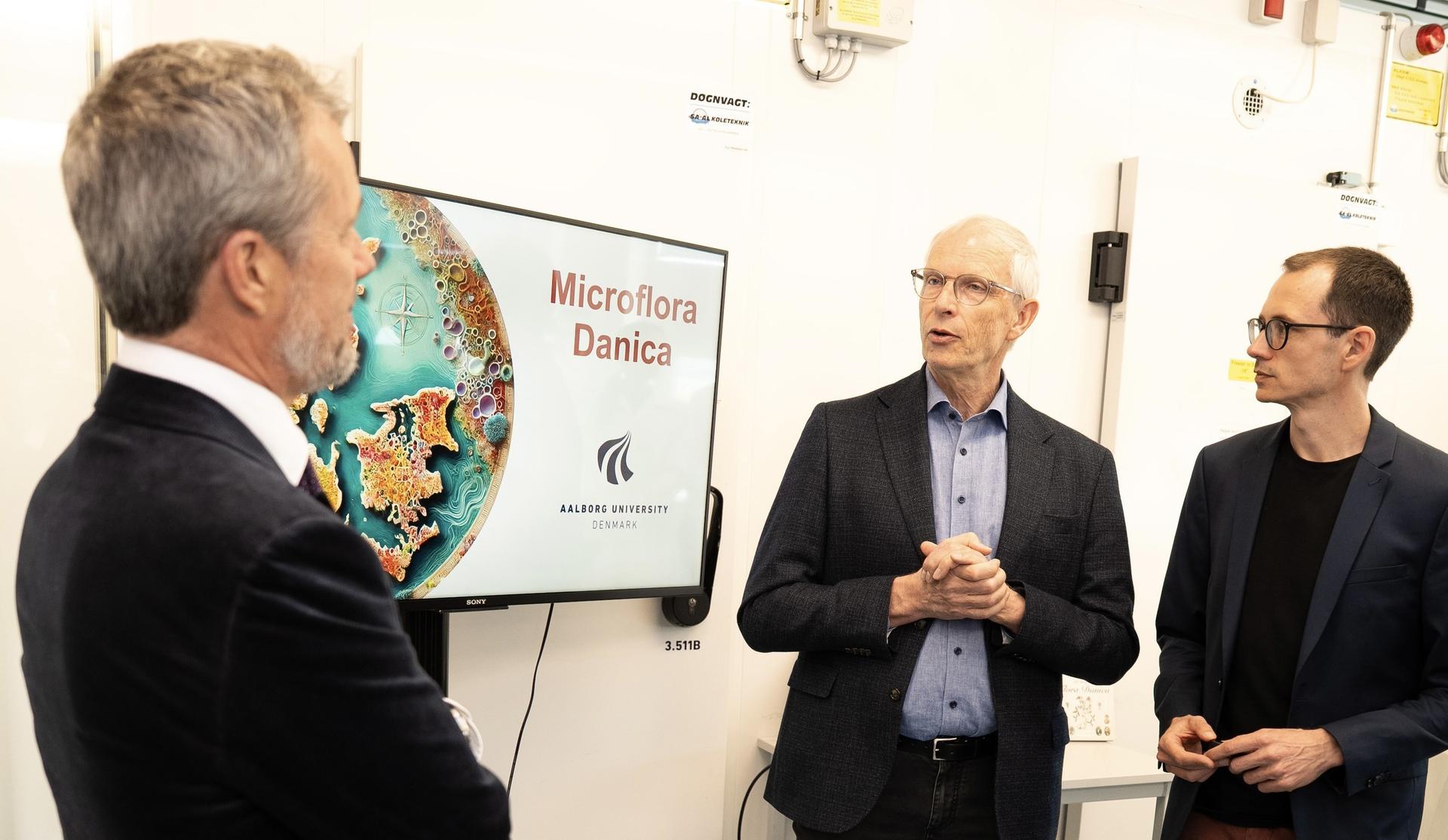
The samples in Microflora Danica were collected over six years and analyzed using advanced DNA technology. The result is an exceptionally detailed map of Denmark's microbial diversity.
Initially, it was simply a matter of figuring out what the microscopic landscape and life look like. This was an enormous task and it was absolutely fantastic to help fill in the blanks on the map. I consider us explorers in the world of microbes," explains Mads Albertsen.
The next step is to investigate the properties and role of the individual microorganisms in the ecosystems and assess whether the new knowledge should change what we do in practice.
"For example, we have gained completely new insight into the bacteria involved in the metabolism of nitrogen and the formation of greenhouse gases. This can have a major impact on land conversion, nature restoration projects and the way we use production land," assesses Per Halkjær Nielsen, Professor in the Department of Chemistry and Bioscience at Aalborg University and the other project leader.
Read more about Microflora Danica
A bacterial name consists of a genus name and a species name. The bacteria that we are naming are new species, but also the first members of their genus. Therefore, we can name both the "genus" and the "species". The names are derived from the place where they were discovered, near one of the Royal Family’s residences.