Spring til indhold.

Nyhed

Old concrete and other recycled materials can keep lakes, streams and oceans free from phosphorus

Lagt online: 02.10.2026

It takes effective stormwater treatment to limit the discharge of phosphorus and other pollutants into the aquatic environment. Now, new research from Aalborg University shows that recycled materials like crushed concrete and iron-coated granules can significantly improve the water treatment process.

Nyhed

Old concrete and other recycled materials can keep lakes, streams and oceans free from phosphorus

Lagt online: 02.10.2026

It takes effective stormwater treatment to limit the discharge of phosphorus and other pollutants into the aquatic environment. Now, new research from Aalborg University shows that recycled materials like crushed concrete and iron-coated granules can significantly improve the water treatment process.

By David Graff, AAU Communication and Public Affairs

Crushed concrete from the building and construction sector and iron-coated granules from drinking water plants can significantly improve the removal of contaminants in stormwater management and treatment systems in urban areas.

This is the conclusion documented by Irina Pitropova, lead author of three peer-reviewed articles that were the focal point of the PhD degree she just successfully defended at the Department the Built Environment at Aalborg University.

The research demonstrates significant potential to help solve one of society's most pressing problems, namely water pollution, by upgrading existing stormwater infrastructure with locally available residual materials rather than investing in completely new treatment technologies.

Irina Pitropova, Assistant Professor, Research Centre for Construction, Climate and Water Technology, VIA University College.

The research findings have pluses for several bottom lines:

  • First, a stronger treatment process is key to limiting the harmful effects of nutrient discharge, such as eutrophication and oxygen depletion.
  • Second, the recycling of concrete and iron-coated granules can potentially be included in the nature-based solutions that are increasingly used for treatment at drainage system outlets in urban areas.
  • And third, recycling supports the widespread ambition in the country's municipalities for strengthened sustainability and circular economy.

"The research demonstrates significant potential to help solve one of society's most pressing problems, namely water pollution, by upgrading existing stormwater infrastructure with locally available residual materials rather than investing in completely new treatment technologies," says Irina Pitropova, who after defending her PhD joined VIA University College as an assistant professor.

Although crushed concrete has great potential as a long-lasting, sustainable and cost-effective filter media for removing phosphorus, copper and zinc, the experiments also showed an elevated pH value in the runoff water as well as significant leaching of chromium, among other things.

Jes Vollertsen, Vice Head of Research, Research Group Leader, Professor, Department of the Built Environment (BUILD), Aalborg University.

Big pluses - and some minuses 

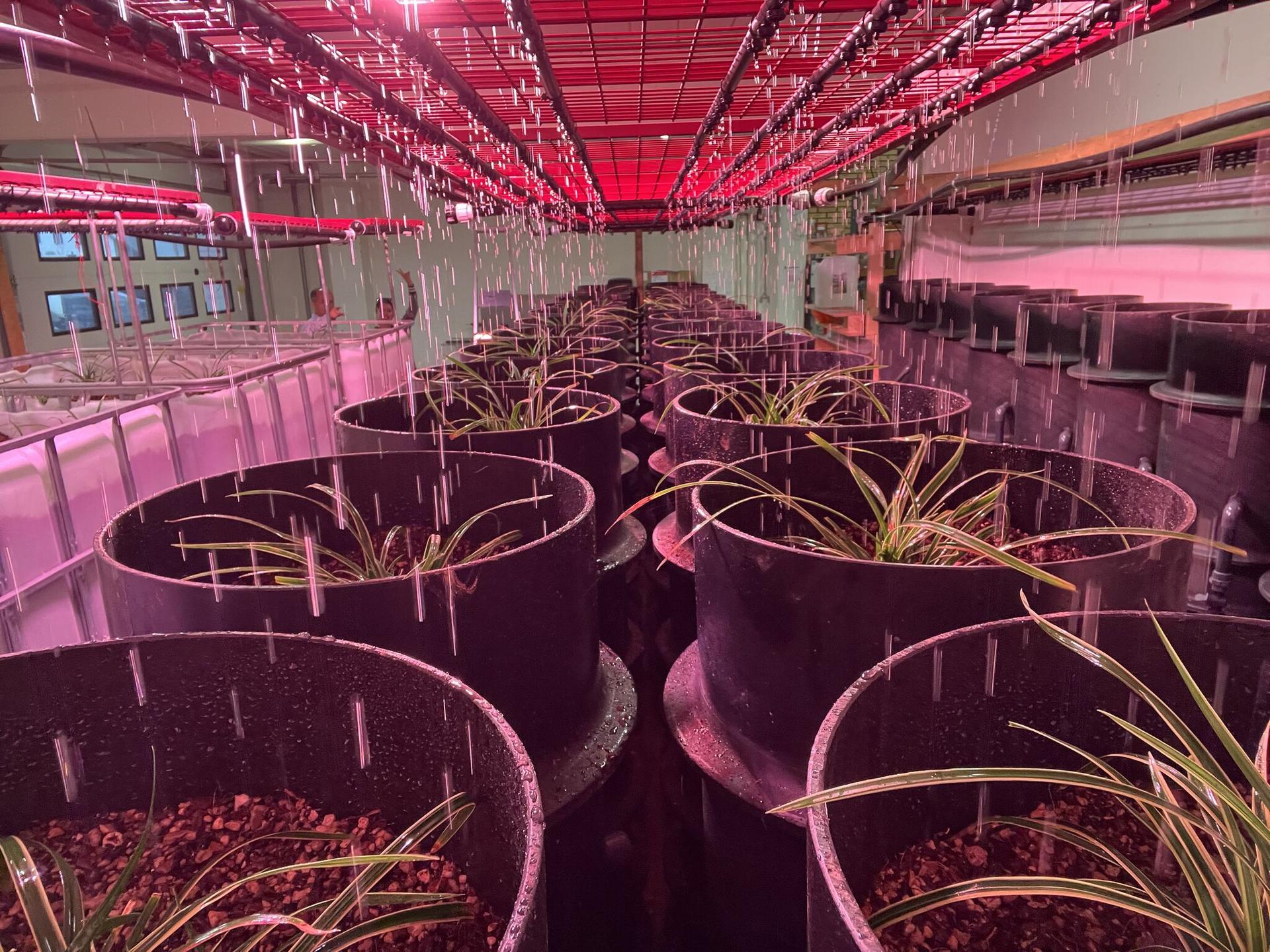
The results from the experiments discussed in the research articles are convincing. For example, in experiments with pilot-scale bioretention plants and column experiments, the materials removed more than 90% of the phosphorus under the conditions studied.

This represents improvements of up to 33.3% compared to the control systems.

Similar results were achieved in the experiments with crushed concrete, but there were also challenges that require further research, explains Jes Vollertsen, Professor, BUILD and the principal supervisor on Irina Pitropova's PhD project:

"Although crushed concrete has great potential as a long-lasting, sustainable and cost-effective filter media for removing phosphorus, copper and zinc, the experiments also showed an elevated pH value in the runoff water as well as significant leaching of chromium, among other things. Therefore, further research is needed that examines optimized material sourcing, targeted pre-treatment and possible applications," he explains. 
Facts about the research

Irina Pitropova defended her PhD with the title Optimizing Bioretention Cell Design for Enhanced Treatment of Stormwater Runoff under Temperate Climate Conditions at BUILD – Department of Urban Development, Aalborg University, on 21 September 2026.

Her supervisor was Professor Jes Vollertsen, Aalborg University; Troels Edelslund Raabjerg, Technical Manager, BG Byggros A/S was co-supervisor. 

The assessment committee consisted of Jesper Ellerbæk Nielsen, Associate Professor, Aalborg University; Carlos A. Arias, Senior Researcher, Aarhus University; and Anacleto Rizzo, partner and engineer, Iridra. 

The research is published in these articles with Irina Pitropova as lead author: 

The articles are based on a number of column experiments in bioretention plants. 


Contact