Nyhed
New robot to help children with autism
Lagt online: 15.07.2026
Nyhed
New robot to help children with autism
Lagt online: 15.07.2026
New robot to help children with autism
Nyhed
Lagt online: 15.07.2026
Nyhed
Lagt online: 15.07.2026
By Charlotte Tybjerg Sørensen, AAU Communication and Public Affairs
Photo: AAU
How should a robot behave if it is to support children with autism in daily life?
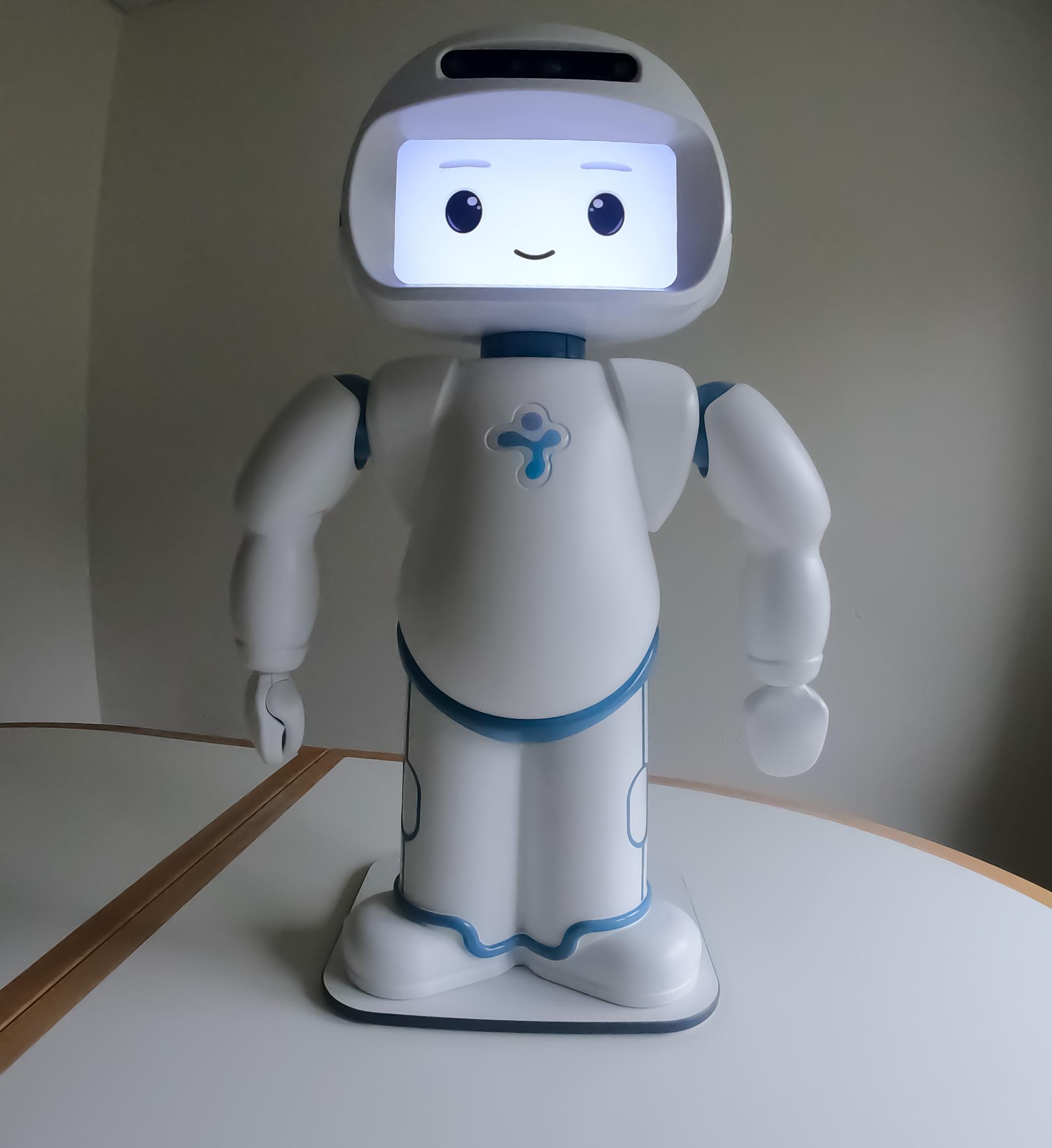
This question is the focal point of a new research project from Aalborg University where educators at Special Kindergarten Birken in Vodskov are helping to develop and shape the functions of the QTrobot robot.
The robot will be programmed based on the needs of children and educators through a co-design process where users are involved from the start.
"The educators know exactly what the children need, so it is their input that controls how we program the robot. The technology must adapt to practice, not the other way around," says Anders Kalsgaard Møller, researcher at Aalborg University and one of the leaders of the project.
The robot will help the children with several things. This includes training their language, their understanding and mirroring of emotions, social skills training; for example, they will learn to express their needs.
QTrobot has been tested in the kindergarten over the past six months. The project builds on knowledge and experience from a previous project on the development of dementia safety technologies where solutions were developed in close collaboration with the public, families of people with dementia, professionals and relevant interest groups. This knowledge underpins the user-involved approach used in developing and testing QTrobot.
This project has led to solutions that help ensure and increase the safety of people with dementia and that are currently used in both private homes and nursing homes.
"By involving people with dementia and their loved ones early in the development of solutions, we not only gained knowledge that can help improve technology. It also provided solutions that also respect people's needs and dignity," says Anders Kalsgaard Møller.
In both projects, he has acted as a link between the users and the technology developers. Co-design is not just a method; it is an approach that ensures that welfare technology is meaningful, usable and rooted in reality.
After the summer holiday, the researchers and Special Kindergarten Birken will continue to work with the results from the project in an ongoing collaboration.
The ambition is to further develop the experiences gained with QTrobot and investigate how the technology can support children with autism in new contexts.
A particular focus will be the transition from kindergarten to school where the robot can potentially help create greater security, recognizability and continuity for children.
Translation by LeeAnn Iovanni, AAU Communication and Public Affairs
Facts about the project