Nyhed
Aalborg University purchases quantum computer to educate the engineers of the future
Lagt online: 19.11.2026
Nyhed
Aalborg University purchases quantum computer to educate the engineers of the future
Lagt online: 19.11.2026
Aalborg University purchases quantum computer to educate the engineers of the future
Nyhed
Lagt online: 19.11.2026
Nyhed
Lagt online: 19.11.2026
By Kim Rathcke Jensen, AAU Communication and Public Affairs
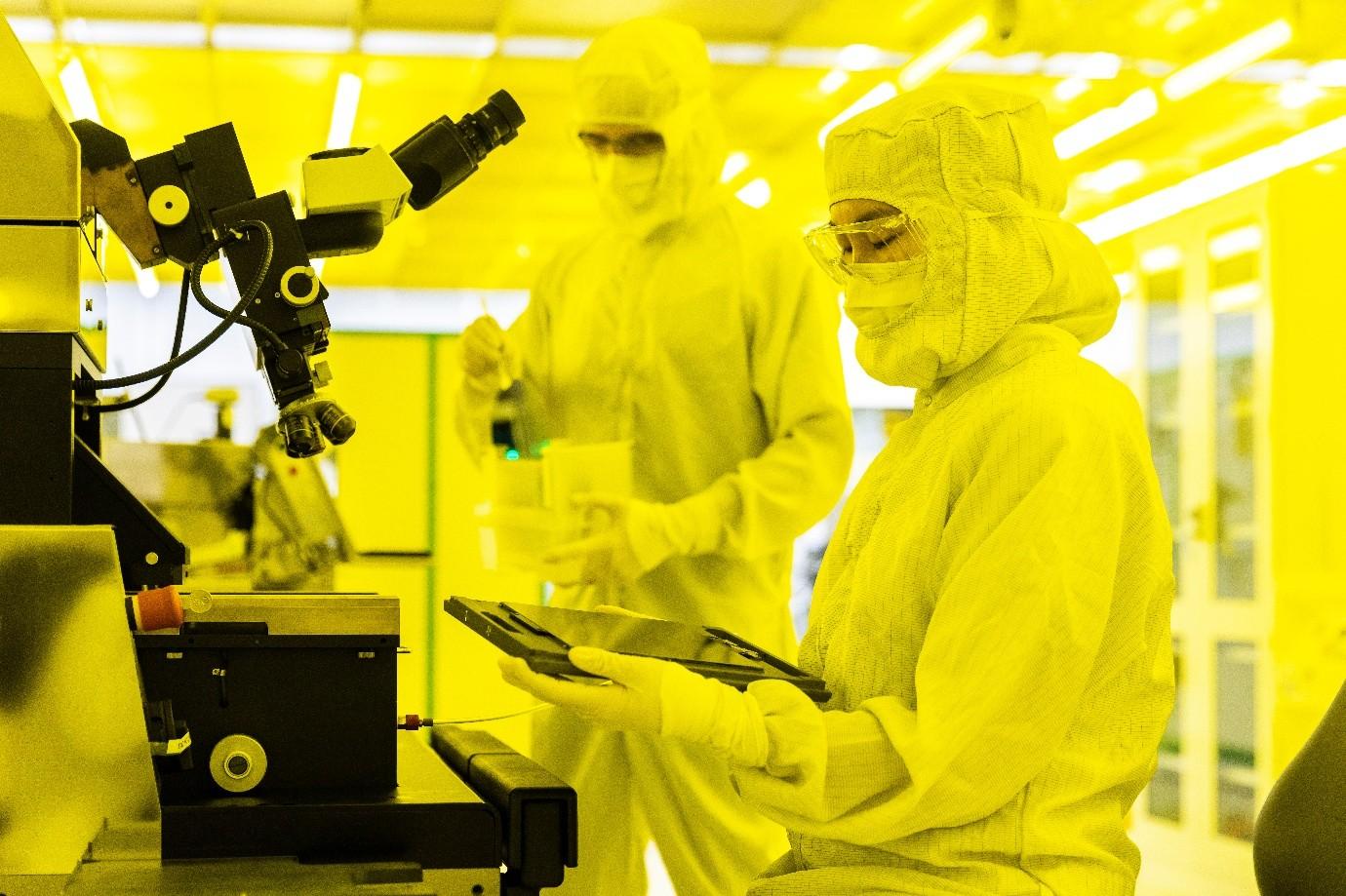
Photo: ConScience
Aalborg University (AAU) is purchasing a quantum computer, which will be delivered and installed during 2027.
But it has not been acquired to compete with the major pharmaceutical companies, tech giants and universities using quantum computing to develop new vaccines, train artificial intelligence systems or conduct research in nuclear physics.
AAU is taking a different approach.
“We do not look at the quantum computer from the perspective of a physicist or mathematician, but from that of an engineer. Not many engineering universities in Europe have a quantum computer because quantum computers are not generally considered from an engineering perspective. We want to change that,” says Rafal Wisniewski, Professor at the Department of Electronic Systems at Aalborg University.
The quantum computer has therefore been purchased primarily for teaching purposes.
“Denmark’s future engineers need access to the physical hardware while they are still studying. Our students and researchers will gain a better understanding of the technology, enabling us to take quantum technology out of the laboratory and put it to use in the real world,” says Rafal Wisniewski.
The quantum computer will initially be delivered with two qubits but will subsequently be expanded to seven. This is still a long way from the largest machines developed by companies such as Google and IBM, which have more than 1,000 qubits.
Although AAU’s quantum computer will be relatively small, it will still be powerful enough to support research.
“Conventional computers are good at solving small problems, but as the problems become more complex, quantum computers may be better suited to solving them. The quantum computer will therefore also be used in our research in areas such as energy, materials and the green transition,” says Rafal Wisniewski.
First and foremost, however, the quantum computer will give students and researchers a practical understanding of the technology. As an engineering university, AAU intends to contribute to the development of future quantum computers, including by helping to make their components smaller and more energy efficient.
In 2003, Aalborg University became the first Danish university whose students launched a nanosatellite. This marked the beginning of space technology research at AAU. Today, university is among Europe’s leading institutions in the field and is home to some of the continent’s most highly regarded space technology researchers.
It also helped lay the foundations for the space industry in North Denmark. A growing cluster of approximately 40 space technology companies has emerged around the university, making Aalborg the Danish capital of space technology.
Rafal Wisniewski hopes that quantum computing will follow a similar path.
“At the time, no one had foreseen the full potential of satellites. Investing in quantum computing is a bold move because, while expectations for quantum technology are currently high, it has yet to make a significant impact in the real world. We are still at the very beginning of the process of turning the promises of quantum technology into reality,” says Rafal Wisniewski.
Quantum computers
Itamar Sivan, PhD, CEO and co-founder of Quantum Machines:
“The next generation of quantum engineers needs more than a theoretical understanding of qubits. They must also learn how to control the qubits and read out the information they contain. That is exactly what Quantum Machines’ control system does in Aalborg’s quantum computer, and what students will learn to work with hands-on. This is where theory meets real-world technology, and the fundamental principles are the same ones that will be crucial to the development of larger, fault-tolerant quantum computers. We are delighted that Aalborg University is giving its students the opportunity to gain hands-on experience with the technology, and we are proud to be working with ConScience to make this possible”.
Marcus Rommel, PhD, Chief Technology Officer at ConScience:
“Quantum computing is advancing rapidly, but educating the next generation of quantum scientists and engineers requires more than theoretical knowledge. Students need the opportunity to work with physical quantum hardware, understand the challenges posed by the technology and gain hands-on experience. With Plug’N’Teach, our ambition is to make this kind of experience more accessible. We are proud that Aalborg University has chosen our system for its teaching and research in quantum technology.
Mikko Nurminen, Chief Sales Officer, Bluefors:
“As quantum technology moves from research labs into real-world applications, the industry needs more people with hands-on experience of quantum hardware. Plug’N’Teach gives Aalborg University’s students and researchers that experience, and we are proud to provide the cryogenic infrastructure that makes it possible. We are glad to support ConScience in bringing this experience to Aalborg, and help more universities build practical quantum education into their programs”.